Game publishers chase trends, and with games taking several years to develop, fads are often long gone by the time these titles launch. Look no further than the fatal live-service boom, created in the wake of Fortnite’s mega success, which saw, and continues to see, games shut down within weeks of launch and people laid off in the process. In the good old days even niche games from major corporations had the space to eventually find their audiences, but now they’re shuttered almost immediately to cut losses. Put simply, Highguard and Concord deserved better.
However, the latest gaming trend is a safer bet. Companies are not relying on online games that require costly servers to keep them playable. Instead, they’re based on innovative ideas that shake up gamers’ expectations. These aren’t ideas that are innovative in 2026, but contained within games that shook players when they were first released. This is a trend based on games that remain iconic to this day.
Publishers are going out of order, taking the most popular games from their most beloved series and remaking them from the ground up. Konami’s Silent Hill 2 took the bones of the original and made something very different and more palatable to modern audiences. On the opposite end of the spectrum, it created Metal Gear Solid 3 Delta, which is one-to-one with the original outside of the new camera angle and a shiny coat of paint. It’s in this context that Assassin’s Creed Black Flag Resynced floats to the surface.
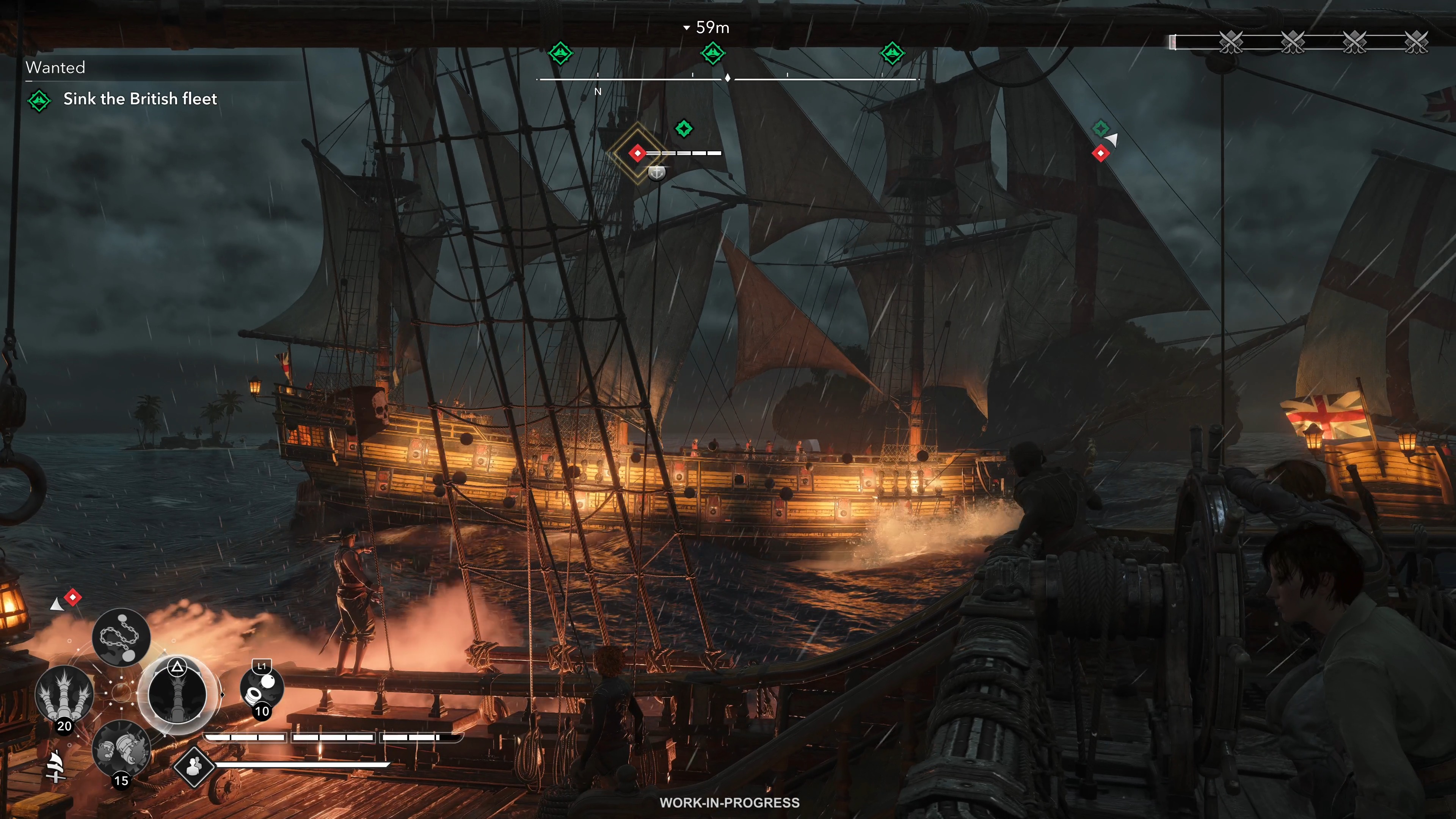
Assassin’s Creed 3 was seen as a low point for the series. Despite its name, it represented the fifth time that players wore the hidden blade and the fanbase was starting to feel series fatigue. That is except for the naval missions. Though the high-seas adventures were relegated to a side memory that not everyone experienced, Ubisoft clearly saw the strength of these sections and thought, ‘what if this was the entire game?’
Assassin’s Creed IV: Black Flag was a landmark moment with gameplay so singular for the series that fans began to question whether it should be considered a part of it. While our pirate protagonist, Edward Kenway, isn’t initially part of the assassin brotherhood, his ideals, particularly his establishment of a free pirate republic, align with the series’ titular faction. Edward might spend more of his time abseiling off boats rather than buildings, but as a pirate, he has more motivation than most to be scouring the world for Ubisoft’s customary collectibles.
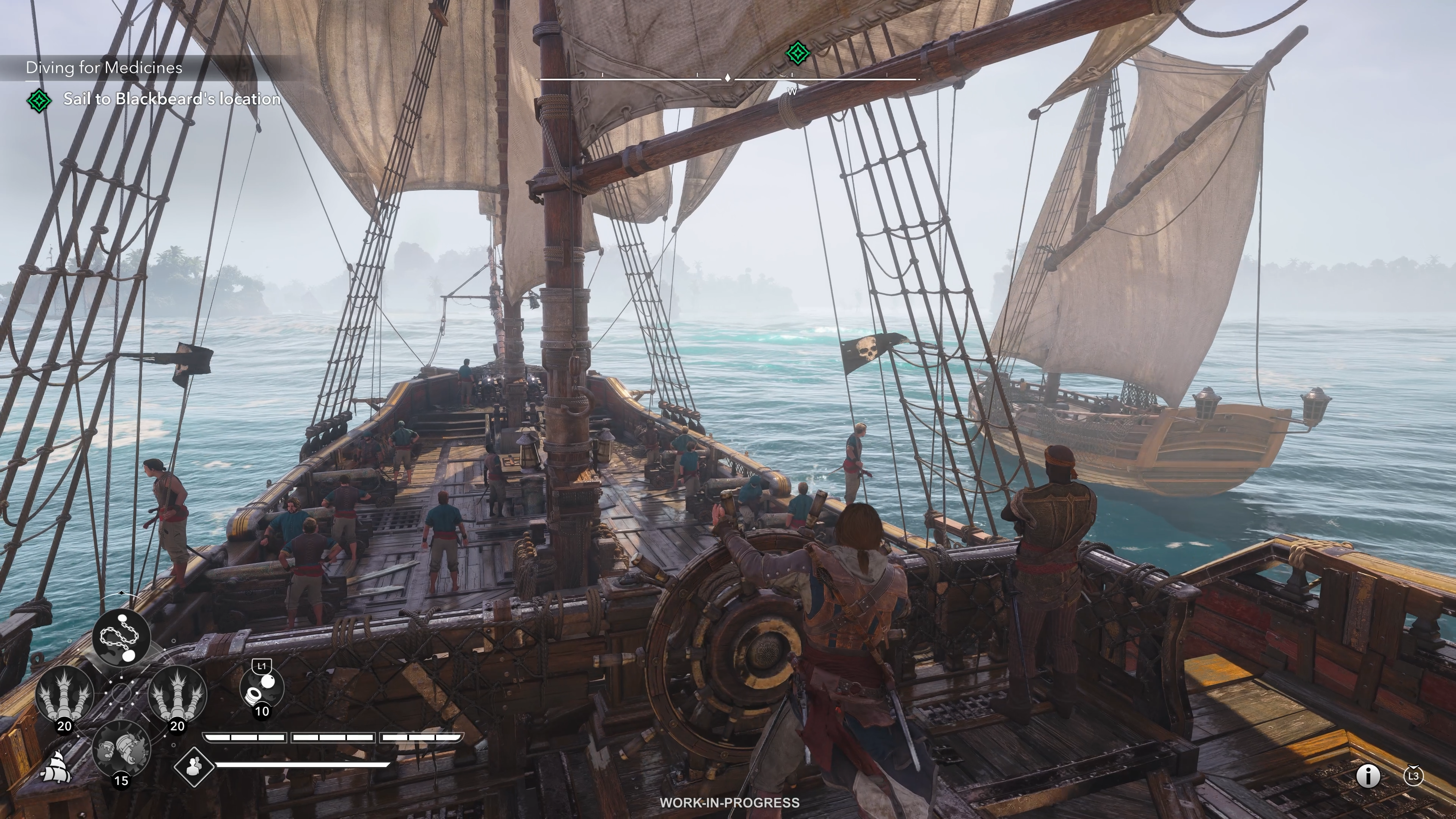
I was invited to visit Ubisoft offices and play Assassin’s Creed Black Flag Resynced for three hours. In this time, I was offered a tempting vertical slice of the game. I played from the wave-crashing opening until after the part where Edward refuses to recover Stede Bonnet’s sugar, some of Black Beard’s missions including the underwater section to find the medicine, and a new mission to rescue and recruit a character created for this remake. I was also allowed free time to roam the open seas, explore some cities and attempt to capture a fort.
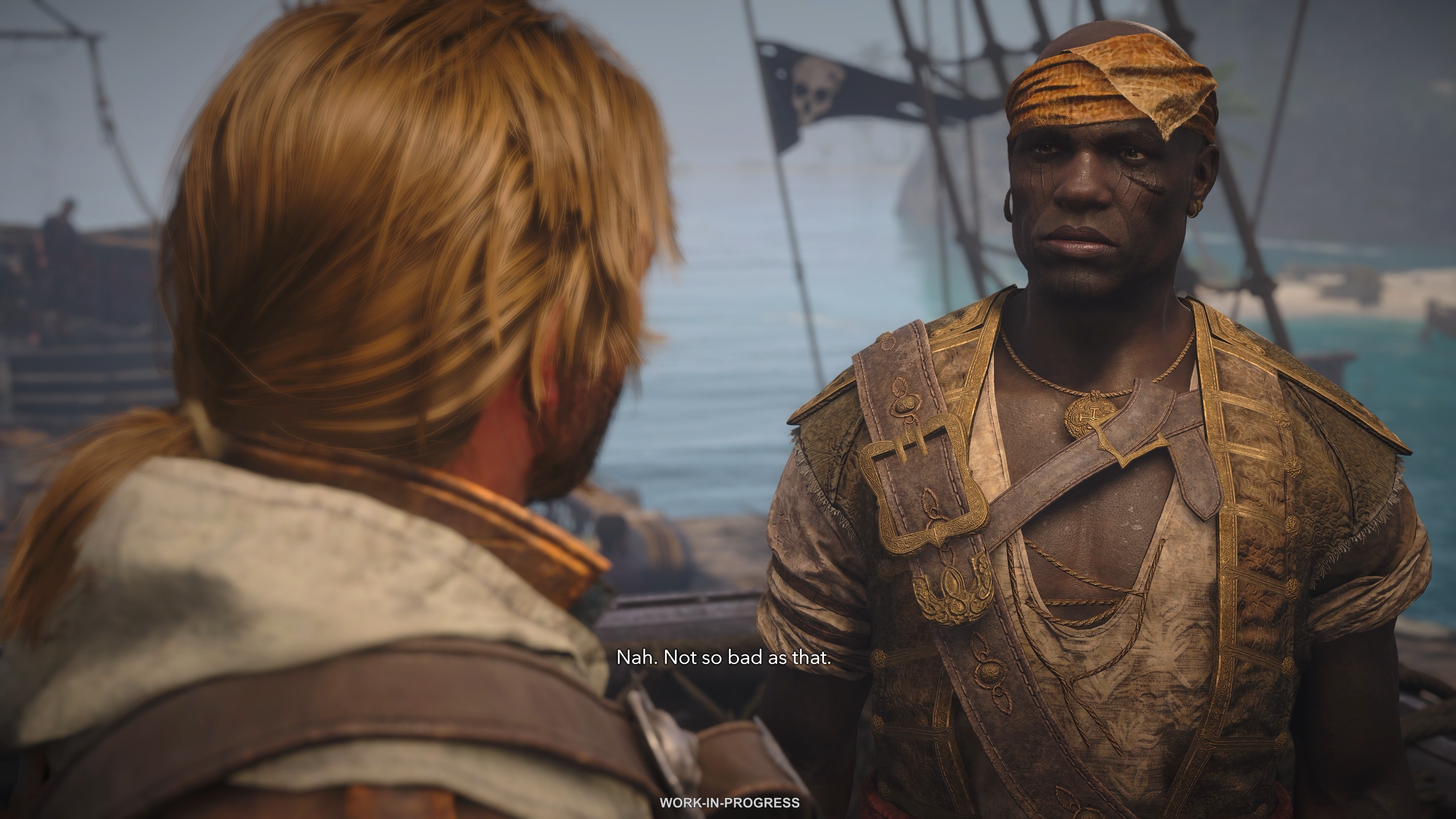
If you’re a fan of the original there is a lot that you’ll recognize. It appears to be more on the Metal Gear Solid Delta end of the remake spectrum, where it sticks closely to the original for better or worse. The environments look breathtaking thanks to their complete graphical overhaul, but the character models, in particular the faces, look stuck in the past. Further, issues from the original are still here like Edward’s penchant for jumping off into the abyss and his extremely lackluster stealth skills.
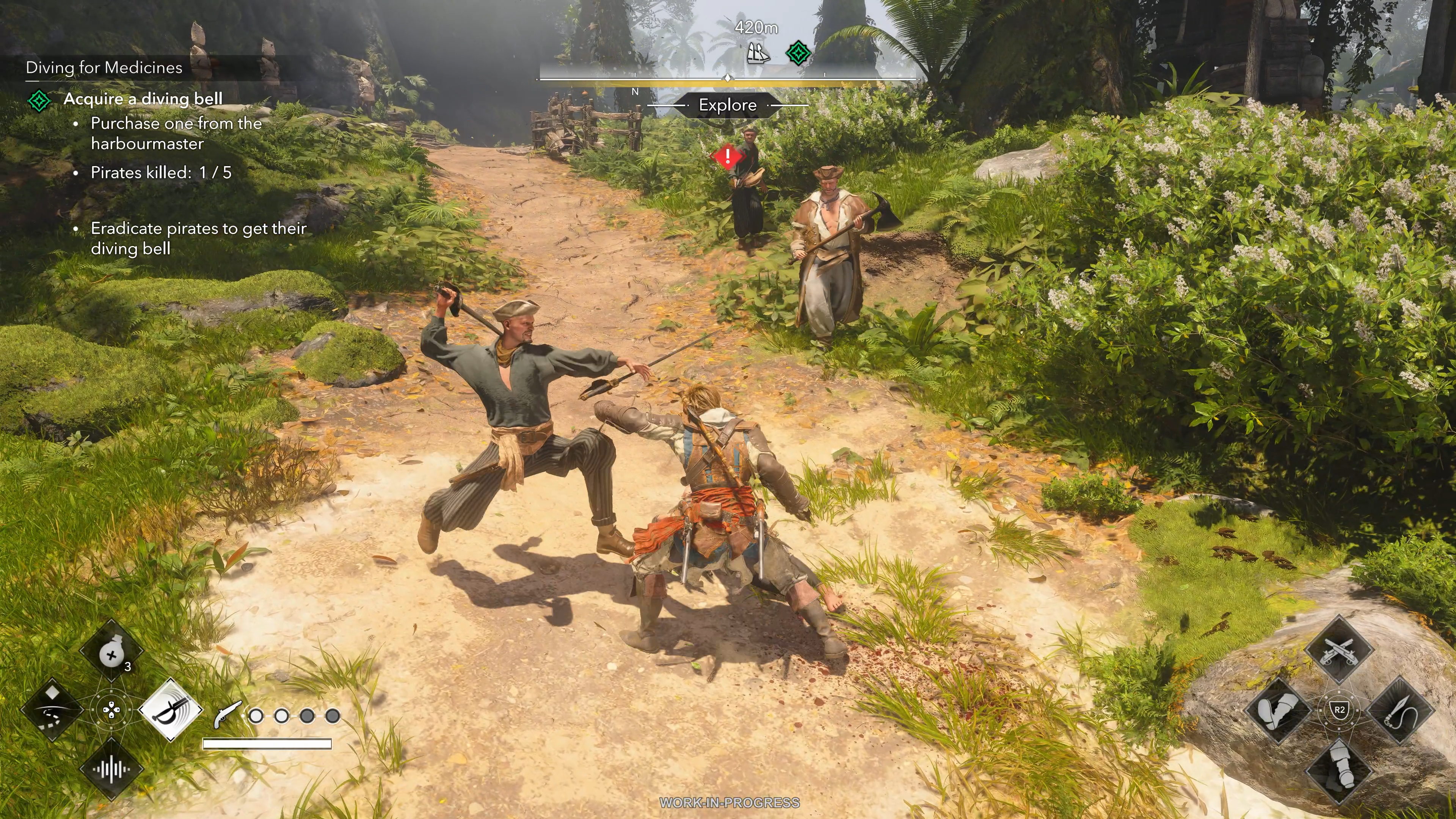
Some adjustments have been made in these regards. You can now jump and crouch manually, and rope darts are unlocked earlier, but Black Flag remains unbalanced. Pulling off a perfect parry into a chain takedown is so easy, perhaps even easier than before, and going unnoticed is so difficult given the vast swathes of guards that engaging in stealth is ill-advised. If you prefer sneaking around to engaging in long combat sections, this isn’t the entry for you. However, combat fans will enjoy the fluidity of the action, and there’s a new demolitionist combat archetype with a blunderbuss and grenade to keep things spicy.
For the returning missions little has changed. Vignettes like watching a whale breach as you set sail for the first time or swimming through an underwater shipwreck look more glorious than ever, but the scenarios play out almost identically to the ones released in 2013. This isn’t a bad thing. These moments are as spectacular as when I first saw them, but I’m hoping that a few new ones will be added into the mix for my surprise and delight.
Conversely, there are some pleasant changes made to key moments. The tutorial fight against the assassin who took down our ship never felt satisfying. The assassins have been built up as extraordinary fighters with the ability to become whispers in the wind, and while it made sense from a gameplay standpoint for Duncan Walpole to lumber through the forest and be a pushover in combat, it felt wrong from a narrative perspective. Now Duncan has been severely wounded by the shipwreck and you no longer feel as if you are on equal footing. While Edward is clearly strong and athletic, if he had faced Duncan at his best his adventure might have ended early.
One of the biggest additions to the game are the new ship officers, which can be found in short side memories and lead to longer optional questlines told over multiple missions. For the preview I rescued Lucy Baldwin, a spunky shipwright who has been imprisoned for murder. Once you board the ship, break her out, and engage in a bit of light naval combat, she’ll join your crew giving you the ability to brace, halving damage when done on contact. Take her back to your home and she will tell you about her grandfather’s inheritance starting her questline.
There are two other ship officers that you can recruit, although I wasn’t able to check them out during the preview. Tobras “Deadman” Smith is a one-eyed master gunner, who will allow your broadside cannons to fire twice as many cannonballs. The final officer is an old man mysteriously called The Padre, who is a master at arms and allows the Jackdaw to do a ram dash into other ships for big damage. The mission to rescue Lucy was only around five minutes long, so I’m not sure how beefy these additions will be, but there are also eight new end game missions featuring British navy officer Robert Maynard. With such a short look at the extra missions it’s impossible to tell if they will be pleasant additions or extra bloat.
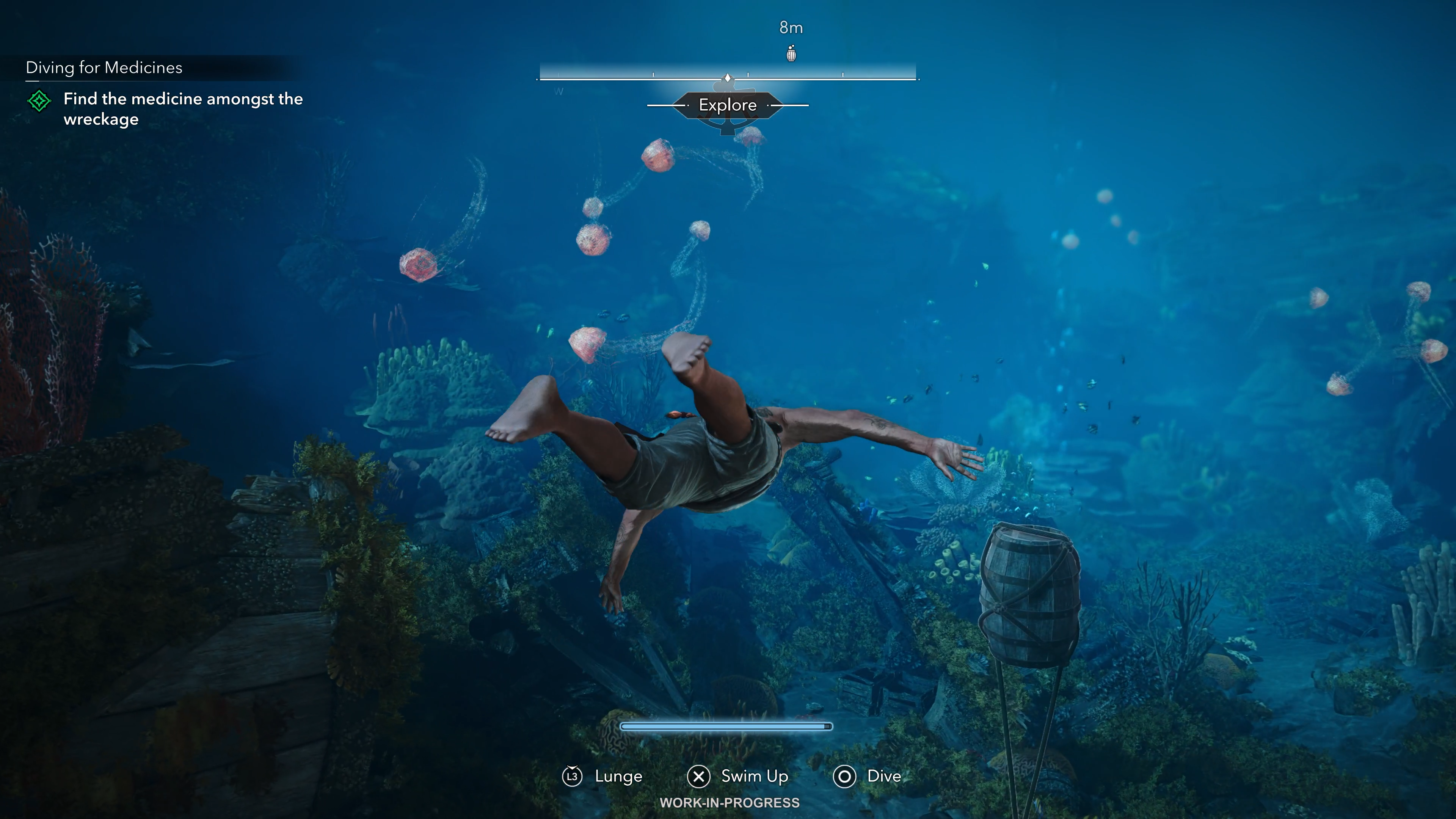
The main addition I’m most concerned about when it comes to watering down the experience, is the ability to dive anywhere. This was a much asked for feature at the time of the original release with people desperate to explore the seas. The underwater sections searching shipwrecks were some of my favorite parts of the original and diving really shines in the remake, but the ability to do so anywhere needs to be approached with care. The Caribbean is vast, and this feature opens up the enormous seabed for exploration. It could be empty and monotonous, or cluttered with collectibles, and neither seems a tempting prospect. Ubisoft really needs to thread the needle to make this satisfying.
More interesting than what I saw in the preview is what I didn’t see. There was no mention of the modern day segments, which were long rumored to have been removed. In the original Black Flag, players were often dragged out of their pirating adventure so they could wander around their office carrying out normal tasks like collecting coffee and hacking into their co-workers’ computers. Modern day segments were a core part of the original Assassin’s Creed games, but their role has declined in importance since Desmond kicked it, landing as they are now, completely absent from the last two entries.
In Black Flag, the modern day segments worked as a form of lore dump where you could read articles or listen to audio files about the overarching story, earn in-game trophies, and find Assassin’s Creed-themed easter eggs. A franchise fanatic might have felt a strong fondness for these sections, but the average gamer thought it brought a grinding halt to the story’s pace. The additional piracy works as compensation for the removal of Abstergo Entertainment and it’s a good trade off if the narrative flow is maintained.
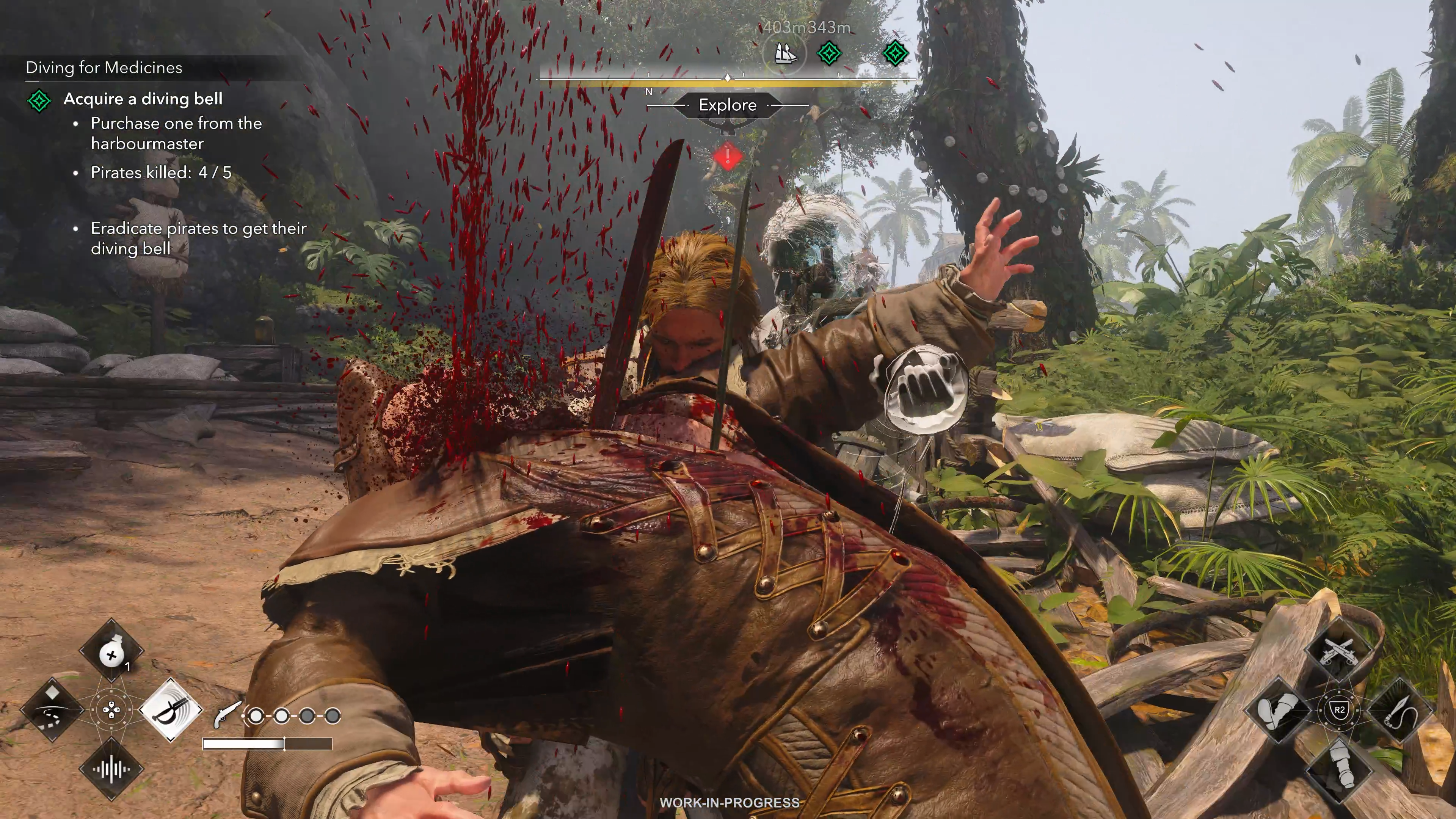
For my preview the game wasn’t quite there yet technically. There was some lag leading to a few frustrating desyncs and guards that could seemingly hear me pass on the other side of the island. They then refused to give up on their hunt despite me being out of sight for several time-wasting minutes. There are still a few weeks until launch, so I have hope that fine-tuning can be completed on time. However, mechanics like this will make-or-break how fun or frustrating the game is.
Assassin’s Creed Black Flag Resynced isn’t here to replace Assassin’s Creed IV: Black Flag, but it isn’t reinventing it either. Outside of the replacement of modern day segments with more pirating adventures, everything you remember from the main game is here, warts and all. Most of the differences won’t be dramatic, and with an excellent game at its core, it’s hard to see how it could fail at greatness. The changes revealed so far have me excited and raising eyebrows in equal measure. We’ll have to wait for July 9 to see if Edward sinks or swims.