There is a moment in the modern World of Warcraft where the game stops feeling like a hobby and starts feeling like a calendar. You log in, and instead of thinking “What do I want to do tonight?” you think “What do I have to do before reset?”
That shift is not accidental. WoW is built around seasons, ladders, and weekly cycles. It is also built around social dependency: keys, raids, and rated PvP all reward coordination and repetition. If you have steady teammates and flexible time, the system feels fair. If you do not, it can feel like you are running uphill while the ground moves under you.
The real pressure point: seasons do not wait
Seasonal design is great for keeping a game alive. It gives players a clean start, fresh rewards, and a reason to return. It also introduces a quiet kind of anxiety: if you miss a few weeks, the gap becomes harder to close.
- PvE: Mythic+ rating, weekly Great Vault choices, pushing keys while the meta shifts.
- Raids: progress windows, lockouts, “we need everyone online,” and the slow drip of upgrades.
- PvP: rating thresholds, win streak volatility, teammate quality, and limited season time for titles or cosmetics.
On paper, all of it sounds like “play more.” In practice, it is often “play at the right times, with the right people, while the season is still hot.”
Time is the real gate, not skill
The common stereotype is that boosting exists because players are not good enough. That is not always true.
A lot of “stuck” players are stuck for boring reasons:
- They do not have consistent teammates.
- Their play window is small (one or two evenings).
- They can play well, but not often enough to climb steadily.
- They cannot afford the trial-and-error loop of random groups.
WoW’s hardest modes are not pure skill tests. They are skill plus logistics. And logistics are where real life wins.
The matchmaking reality nobody wants to talk about
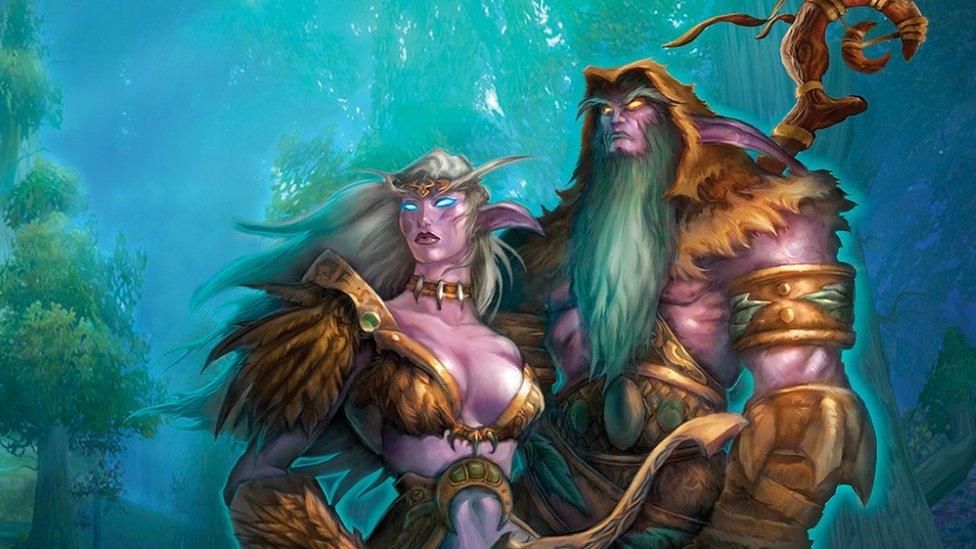
Rated PvP is a clean example. Even strong players can get stalled by variance:
- teammate mismatch
- bad comp synergy
- tilt and quit behavior
- queue timing (who is online matters)
You can be improving and still watch your rating bounce in place because the system rewards volume and stability. Meanwhile, the rewards that motivate people to try in the first place—titles, mounts, achievements, cosmetic unlocks—are attached to time-limited seasons. You cannot “finish later.” Later becomes next season.
This is one reason PvP boosting stays popular even when the community complains about it. The demand is not just “carry me.” The demand is “I want to reach the reward before the window closes.”
Why the market exists, even if people dislike it
Boosting is controversial because it touches status. A title, a mount, or a rating can be seen as proof of skill. Paying for progress blurs that signal, and it annoys players who worked for it the long way.
That reaction is understandable. But the market does not exist because people are evil. It exists because the game’s structure creates predictable pain:
- Seasonal FOMO
- Group dependency
- Time-gated progression
- High repetition requirements
When those forces stack up, “pay for help” becomes the same type of decision people make in other areas of life: outsource the part they cannot realistically fit into their schedule.
The difference between “help” and “hype”
One thing editors and readers often miss is that boosting is not a single product. There is a massive difference between:
- paying for a small push (one goal, one reward)
- buying coaching to actually improve
- using a service to avoid endless group roulette
The problem is that the industry tends to market all of it the same way: loud, exaggerated, and impatient. That is the part that makes the whole space feel shady.
If you view it through a consumer lens, players are looking for two simple things:
- clarity (what exactly happens, how long it takes, what they need to do)
- predictability (communication, scheduling, and no surprises)
Any service that cannot offer those basics will always feel risky, no matter how cheap it is.
Why “trust” is the real product
If you talk to players who have bought boosting before, they rarely describe it as a luxury. They describe it like a workaround.
They are not paying because they love spending money. They are paying because they have hit a wall that is not fun anymore. The wall is usually not “I cannot press my buttons.” The wall is “I cannot control my group quality,” or “I cannot grind ten hours this week,” or “my friends quit and now I am alone.”
At that point, what they want is a clean, low-stress experience. They want someone to answer fast, explain the plan, and deliver without drama.
That is why the best “boosting” websites do not win by screaming the loudest. They win by feeling normal.
A small note on how sites try to look “normal”
There is an interesting mini-trend in this market: boosting services borrowing UX and structure from mainstream e-commerce. You can see it in the way sites are built now:
- organized categories (by game and activity)
- clearer product pages
- FAQ blocks
- less clutter, faster load times
- checkout flows that feel familiar
This matters because the first fear is always the same: “Is this legit?” A clean interface does not prove legitimacy, but it lowers the immediate suspicion. After that, communication and delivery decide everything.
One example of a project that leans hard into “make it clear, make it fast, make it organized” is Simpleboost!
Where this is going next
As long as WoW remains seasonal, competitive, and time-gated, the demand for “help” will not disappear. What will change is the shape of that help.
The market is already splitting into clearer lanes:
- coaching and improvement (less stigma, more accepted)
- small goal-based boosts (one-time pushes tied to rewards)
- time-saving services (the “I just cannot grind” category)
Meanwhile, the community will keep arguing about fairness. That debate will never end because it is not purely about rules. It is about identity: what achievements mean.
But if you step back, the story is pretty simple. People pay for help in WoW for the same reason they pay for convenience anywhere else: the game demands time in a specific format, and not everyone has that format available.
And that gap—between passion and schedule—is exactly where this market lives.
For the latest gaming news, follow GameWatcher on BlueSky, check out our videos on YouTube. We sometimes include affiliate links in our posts, which grants us a small commission, thank you. Please support independent Games Media. ❤️